Showing posts with label to. Show all posts

Photography New to me Canon EOS 20D camera

My new camera is a lot like my old camera in so far as they both take pictures, and they are both 8 megapixel cameras.

But after that they diverge a bit.

The Sanyo Xacti that Ive been using for the last 1300 photos Ive taken was gifted at me by someone (Thanks anonymous company) when I really needed a replacement because all the point and shoot digital cameras Ive bought to make this blog (I think its 3 now) fall over just after 5000 happy snaps.

5000 seems like a lot when I put it in print, but in terms of time, that equates to less than a year per camera.  Sure they cost less than AU$100, but I still want more than a year out of anything I buy.

This one that Ive been using is still going strong, and does a pretty good job of it I suppose, but I found the interface very heavy going.

It has quite a few options and features, but all of them have to be accessed via a clunky multi-level menu system. That means that every time you want to do anything other than what its set to do now, you have to explore a stack of menus to finally find what you need, and by the time youve found it, the ladybird has finished eating its aphid, and flown away.

My new camera on the other hand is a zillion times better to work with. Ive only had it for around 10 hours, but it already feels comfortable.

Its taken around 1200 pictures so far in its life.

I have very greasy fingers.

Im eating zucchini and haloumi fritters.

Delicious.


The new camera is a Canon 20D. It was originally sold for around AU$1500 (Australian dollar) in 2004, and was described as a "semi-professional" or "prosumer" camera at the time, which of course means substantially more than other imaginary words and their associated imaginary metrics.

But on the whole, the camera rocks.

Thats my official rating out of 5.

It has a 4 GB CF memory card, which is the size of a bulky circa 2012 64GB mp3 player, and that cost around the same as a bulky circa 2012 64GB mp3 player. It takes a while to transfer photos, but it has very nice functionality, and best of all has an interface that works.

It also comes with some nice lumps of glass in the lens. It seems to be the lens that lets down lots of little point and shoot cameras. The quality of the photos taken by my new 8 megapixel camera is a lot better than those Ive taken with an 8 megapixel point and shoot style camera.

The second lens feels a bit like it might blow away, but at $10 its a very nice thing to have around.

The camera came with a Canon 18-55mm f3.5 image lens, with image stabalizer. Ive just discovered I love image stabalizing. Image stabalizing allows you to be a bit shakey, and have the lens do some stuff to fix it.

As I understand it, there are exactly two ways to do image stabilizing.

  • 1. Project an image onto the censor, so that the image is a little larger than the censor, and the image has some extra image in the margins. Then have the camera track your shakey projection, and then use magic or software or something to knit together a nice crisp image.
  • 2. Track some points on the image, and move the lens around a bit so that any given point on the censor always sees the same bit of the image, or move the censor to achieve the same thing.
  • 3. Use gyroscopes mounted on at least two axes to resist the movement of the entire camera. Things spinning around like to keep doing it. If you take the tire off your bike (stop first) and hold the axle while someone else spins it as fast as they can, it becomes difficult to change the angle its on. This is why a spinning top (do they still have those?) stays upright, and is simply due to the universe being an amazing place.
Amazing!

The camera shows its age through its 8 megapixelness, as at the time of writing, thats about 16 megapixels short of where it should be.

I bought it from a second hand camera store in Japan for $150 with the Canon 18-55mm zoom, and I got the second lens, a Tamron 100-300 zoom, for $10 from the bargain bin.

Thanks Tom.

Toms a friend of mine.

Hes really good at buying way too much camera gear from junk bins. His hobby includes buying those instamatic film cameras that were big in the 70s. He likes to buy them when they have rolls of film still in them so he can process the film. In some subtle way, thats slightly different from buying some old photos.

Which is nice.

For him.

Hes kind of a time traveller, but he only gets to look, and doesnt get to choose what he looks at.

Mostly he gets to look at darkness.

Sometimes darkness, but with slightly mouldy edges.

Luckily, I dont suffer from collecting things other than my collection of odd people I know.

Toms one of my favourites.

Thanks Tom.


120 Things in 20 years - One of the best parts about getting my new, second hand Canon 20D camera, was getting to look at the Japanese supermarket junkmail it was packed in. Its been 20 years since I was in Japan, and the junkmail paper is now of even better quality.

Read More..

Sites I Want To Revisit

This first site may be local to Chico, CA, but you too probably have community gardens and garden groups in your area.  I founf this with a Google search for Community Gardens CITY NAME.
http://cultivatingcommunitynv.org/community-gardens/list-of-community-gardens/

Here are a few sites with many good articles on everything from grafting to pest control
http://deepgreenpermaculture.com/
http://www.ipm.iastate.edu/ipm/hortnews/
http://www.permaculturenews.org/


Heres a REALLY COOL APP.
It calculates fish tank perimeters.
http://www.cnykoi.com/calculators/calcnh3c.asp

I will continue to update this post.

¸.·´¯`·.´¯`·.¸¸.·´¯`·.¸><(((º>
.¸¸.·´¯`·.¸><(((º>
Read More..

Living may be Hazardous to your Health

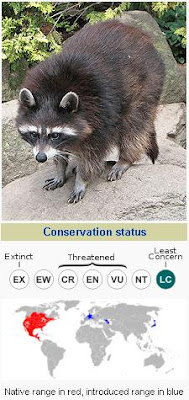
The Raccoon


I set up my first attempt at a biosand filter last night. Alas, it isnt flowing well, so I see minutes, even hours, of playing in the sand, trying to rectify this situation. Shucks...

In the mean time, I went to the internet, to see if there was a quick explanation of why things arent working. What I came across was information that fine sand (3.5-1.5 mm average size, with a reasonable amount of uniformity) should work.

But I also came across big red additions to one page, warning that you can never know if water from a personal biofilter is actually really safe, particularly if it sources from a roof. The most worrisome issue for the webmaster, it turned out, was the tiny eggs that are found in the leavings of raccoons.

Coons have it great. There is a nematode/worm that lives in their gut (70-90% of coons are so affected). The coons arent apparently bothered by this worm, but other species who ingest the eggs can suffer weakness and even death. Which means good eating for the fortunate coon that is able to overpower a weakened animal.

Sometime in the mid 1900s, a scientist opined that it would be possible for humans to be affected by this parasite. Since then a dozen or so cases of the illness have been documented, along with five deaths (according to Wikipedia) - allegedly all from toddlers who had played directly with raccoons or raccoon fecal material. It takes a couple of years to kill, but cannot be prevented unless treatment starts within 1-3 days of ingesting the coon poop.

Its a terrible thing for a small child to become weak and slip into a fatal coma. Because this is possible, should all people of all ages across the entire country eschew nature? No home gardens, no playing in the yard, no camping or walking or breathing? Thats what it would take to completely and entirely avoid any consequences of injury from nature and the pollutants we humans have introduced to the natural environment around us.

Five deaths were caused by these raccoon-native nematodes over the past forty years. By contrast, road accidents kill about 40,000 people in the US each year. Falls kill 13,000. Drowning kills almost 4,000. Shall we therefore avoid roads, gravity, and water?

By all means, if you find your toddler playing pat-a-cake with a coon or munching on coon scat, do take them to the doctor. Wash their hands after theyve been playing in the dirt. Explain to them that sucking on their filthy hands might cause slow brain death, so youd rather they didnt do it.

But the chances are pretty low of your child getting to be one of the USs 2,000 annual toddler deaths (ages 1-5). And at that they are a thousand times more likely to die from the flu than from coon worms.

In the mean time, I am reminded of Jesus saying, "Blind guides - you filter out gnats, but swallow camels!" [Matthew 23:24]

And tonight Ill work on why my sand filter is filtering so thoroughly that its only passing a few ounces per hour, instead of the 10-20 liters per hour that is supposed to be possible.
Read More..

Want to use IBCs or Barrels

IBCs and 55-gallon drums from novabarrel.com


Though I personally love stock tanks for making an aquaponics system, I just wanted to show you reasonable prices/sources for IBCs and 55-gallon barrels.

Novabarrel is a source local to me here near Washington DC - I can get 55-gallon barrels for $35 or IBCs for $145 (he only has one in stock currently, but expects another dozen or so in the next month). An IBC system (3 IBCs (~$435) cut into a tank, three growbeds, and a sump) could fit in the 10 ft. x 10 ft. HomeDepot greenhouse ($250 delivered to your door). For those in the middle of the country, you can find used IBC containers via eBay, Craigs List, and web searches.

When I was considering a system using 55-gallon drums, I came across a guy in New Jersey who has thousands of the things - blue, green, and white.

One note of caution - the white/translucent barrels and IBCs break down in direct sunlight. Youll want to paint these, unless you need them to stay white/clear for some reason.

The reason I was researching novabarrel again is Im in search of a white 55-gallon drum so I can make a black soldier fly (BSF) composting system. You can see the 55-gallon drum design for BSF composting at GardenPool.org. BSF larvae power through food scraps, so you get compost faster than standard methods. Plus BSF larvae are good eating for the fishies.
Read More..

Making smoked foods A better way to brine

If like me you have no room in your fridge for a bucket full of meat when youre brining, try putting into an icebox.

Throw some ice in with it and youre set.


120 Things in 20 years  thinks this might be a record shortest post ever.
Read More..

Anyone want to do research on aquaponics


The US Department of Agriculture (USDA) funds research on sustainable agriculture - up to $250,000 for multi-year projects. Most the Sustainable Agriculture Research and Education (SARE) grant pre-proposals were due 7/14, but the pre-proposals for the Northeast region arent due for another couple of weeks.

Id like to conduct a longitudinal study of how much the combination of a rocket mass heater and a subterranean heating/cooling system can extend the growing season, tracking temperatures and yields across numerous variables (USDA Zones, urban/suburban/rural, crops).

The bad thing is Im a federal employee during the day, so I can only conduct this research (and apply for a grant) as an individual. There are various laws that prevent me from representing another entity in receipt of federal funds. And I dont know if theyd let an individual conduct research on the scale Im interested in.

The other bad thing is Im so close to the deadline, and others who might be interested in doing something along these lines are on vacation.

The good thing is a UN-published study showed the underground heat exchange system (UHES) or subterranean heating/cooling system (SHCS) increased yield by 50% compared to an equivalent greenhouse that lacked the subterranean heating/cooling technology. John Cruickshank shares his experience with UHES/SHCS at his SunnyJohn website, saying:

...you can expect to raise the soil temperature to 65-75F by the end of the summer. That is the soil temperature of all the soil in the greenhouse to a depth of 3 feet!! You can expect to keep it cycling in that range for 3 months after the summer season before it begins to discharge seriously. That represents an enormous influence on the zone above it. For a 30 by 20 greenhouse I believe that is in the neighbourhood of 75 tons of soil and represents several million BTUs of heat. How this all pans out for season extension is a guess, but I assure you, it will extend your season!! For Zone 4, we can grow Eliot Coleman style in simple hoop houses for 12 months of the year using just a SHCS. Adding insulated north walls, double skins, propane CO2 generators and tighter building envelope we can grow tropically well for 10 months.

So if we add a rocket mass heater during the winter, to add BTUs to greenhouse soil during the short winter days, Im thinking it might be possible to enjoy "tropical" conditions year round in inexpensive hoop houses.

Anyway, let me know what questions you think USDA-funded research into integrated energy systems and aquaponics ought to answer!
Read More..

Apologies to the Imp


My First Aquaponics Setup - a Windowfarm

[In the previous post, an autistic daughter plopped one of her goldfish into the big tank. We despaired for its life.}

Ive been scanning the surface of the tank to see if anything floated to the surface. No luck. Then I tried randomly netting the murky depths in hopes of bagging the fish. Again no luck.

Is there an inverse to spontaneous generation? You know, when something disappears without physical explanation?

Tonight I was looking for an old youtube video of mine, when I remembered:

The first time I set up each aquaponic windowfarm, the fish tank was cloudy.

For a 5 gallon tank, it only took two goldfish a day to clear the water. The fish created waste, the gravel began growing good bacteria that feed on the waste, the water got clear.

The water got clear.

All my goldfish have survived this process at least once before. Maybe, just maybe, the goldfish my daughter dumped into the drink was still OK.

In fact, maybe I could help things along by adding the water/waste from one of the two aquaponics fish tanks. Like the one that stopped flowing in early fall. All the plants were dead before the lack of water was noticed, but the fish had survived without the water-cleaning effect of the plants.

Come to think of it, maybe it wouldnt be a bad thing to add a second goldfish to the big tank, to speed things along.

My autistic daughter was still awake when I decided to take one of the remaining three goldfish. She watched me trying to snag the short-tailed fish - they look ordinary, but speed around and eat like the next meal may never come. Great metabolism, I was thinking.

We dont have a net, so I was trying to catch the fish with a tube my daughter had used the day before. Several attempts later, I was ready to give up.

"Let me," my daughter asked. Reluctant, I handed her the tube.

In one swift move, my daughter had the fish. And it wasnt just luck - she used a very unusual and gentle technique. I was impressed--and humbled.

After taking time to gradually transition the fish to the new water, I released it.

In a minute I saw the fish again. And then I saw the golden glint was two fishes. I watched for far too long, and the pair of fish kept showing up together, linked as though by a chain.

They both seemed healthy and, I dont know, fond of each other. Go figure.
Read More..

How To Make a Check Valve

Check valves are handy but they can be expensive.
Here are two similar ideas that you can build for very little cash.

How To Make a One-Way Check Valve - For Cheap!!


Making A Zero Back Pressure Check Valve


Read More..

Immaculate Conception Church in Albuquerque to Offer Church of Second Chances Program this Fall

Photo: JustFaith Ministries
Immaculate Conception Catholic Church in Albuquerque is one of dozens of faith communities around the country that will participate in one of three JustMatters modules that JustFaith Ministries is offering this fall. The modules encourage small groups to explore critical current issues within the context of the Gospels and the life and example of Jesus. "In a world that is too quick to encourage rhetoric that divides us from one another, these experiences cultivate genuine dialogue, contemplative prayer, and community," said JustFaith.

Immaculate Conception will offer an eight-week session around the Church of Second Chances module, which shares the stories of incarcerated people and exposes injustices in the judicial system through the lens of faith. This module hopes to inspire a prophetic revision of incarceration that invites restoration, mercy and reconciliation.

This newly revised eight-session version of JustFaiths Prison Reform module represents greater diversity in the voices of those behind bars, includes updated video resources, encourages deeper dialogue, and incorporates Pope Francis’ message of mercy.

The eight-week session will be held  each Thursday evening at Immaculate Conception, 619 Copper NW (map) in downtown Albuquerque, September 24 through November 12, 2015,  in the Guadalupe Room.  For more information or to register, please call or email Joy Dinaro in the church office.(505) 247 – 4271 ext. 3034  jdinaro@iccabq.org

In addition to the module on prison reform, JustFaith Ministries offers the Crossing Borders program (immigration) and The Sultan and the Saint (Muslim-Christian relationships) this fall (More details here), but no churches in the Albuquerque area are offering these two programs. Other programs on the environment, solidarity and peacemaking are currently available but have not been recently revised and are not supported by JustFaith staff this fall.
Read More..

Sister Simone Campbell Urges us to Engage in Holy Curiousity and Sacred Gossip

"Faith calls us in the Christian tradition to carry Jesus into the marketplace, to ask the questions Jesus would ask now,” Campbell said. “We the people have got to have holy curiosity and sacred gossip so that we create a groundswell of claiming the communal reality that we’re in this together.”

Holy curiosity that makes us ask people those very improper questions like when you’re in a restaurant and you speak to your waiter and you say, are you 8 making more than minimum wage, or do yo u depend upon tips to get by? When you’re in a dress shop or a grocery store, are you all unionized here, do you have good wages? And what I’ve discovered is often, the answer is no. No, they don’t. How do we get justice if our focus is getting the cheapest possible price, or the most possible stuff? How do we do justice in our lives? That’s the holy curiosity we have to ask, where we have to ask the question, is justice happening here? Can we make a difference? But then, the best part, my favorite part is then, we’ve got a right to sacred gossip, sacred gossip where I can tell you, do you know?

“I always joked that the miracle of loaves and fish was sharing. The women always knew this. But in this moment of need and notoriety, I ache, tremble, almost weep at folks so hungry, malnourished, faced with spiritual famine of epic proportions, my heart aches with their need. Apostle - like, I whine. What are we among so many? The consistent 2,000 year - old ever - new response is this ... Blessed and broken, you are enough. I savor the blessed , cower at the broken, and pray to be enough.”

Sister Simone Campbell
excerpts from keynote address to Episcopal City Mission Annual Dinner, June 2015, and comments in ECM Awards Dinner
Read More..

Theres still time to plant your winter crops

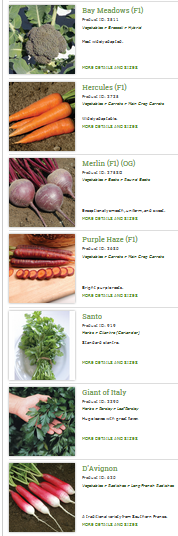
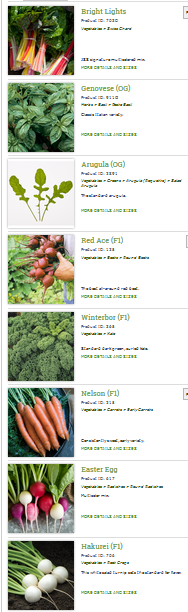
 Redwood Seeds has these to offer
 &
Johnys Select Seeds recommends these winter vegetables.


Read More..

An Invitation to a Village Feast on Sunday


Read More..

Connecting a bulkhead to an EPDM liner

I want this to be done! But this bulkhead is giving me a lot of grief. I get that it was not designed to connect to EPDM, so heres the solution I have come up with.

 I cut a piece of 3/8" plexiglass and applied a lot of silicone to the underside. Then I washed it, and the EPDM with denatured alcohol and applied this fish safe EPDM seam tape.

One thing Ive learned is that if the bulkhead is over tightened it will squeeze the soft inside gasket out of round, and cause the seal to fail.  Im not sure... this might be what happened yesterday, but if this does not work Im just going to smother the fitting with even more silicon until it complies.

This has turned out to be a lot more difficult than I ever imagined and Im tired of dealing with it!

UPDATE

I found the source of my leak.  In my attempt to squeeze all the bubbles out of the silicone I literally stood on the acrylic and jumped up and down on it.  Apparently I caused a small crack in the plexiglass, and the leak.  
To view my repair which was done with much more silicon and care click here.


Im taking no chances.  This hole saw fit over the bulkhead and the two lead weights and a 3 lb hammer will keep the pressure on over night.

I might be overly optimistic, but I have faith, and have begun to shovel gravel into the grow bed.

Read More..

Ten Calories Of Energy To Produce One Calorie Of Food

I just read the article  "The Permaculture Solution – an Interview with Warren Brush". It said "Estimates are that the modern agriculture system uses ten calories of energy to produce one calorie of food."

Fearing that I too may be growing negative net energy food. I immediately looked at the energy costs involved with my soil-less gardens. My hydroponic pump uses 160 watts-hours per day or 137.6 KCal or about 576 KJ/day.   Chris Carr was kind enough to remind me that nutritional calories (KCal) are equal to 1000 chemistry calories (cal).    A chemist would probably use Joules and Kilo-Joules (KJ) rather than KCal.   But the we think of food in terms of KCalories rather than Joules, so Ill keep it in KCal also known as large calories as much as I can.  There were other errors in my first draft,  so heres the rewrite.  Many of my calculations will be done using the Energy and Work Unit Conversion at unit-conversion.info/energy.html. 

I did some research and found a daily harvest of 8lbs of lettuce and 100lbs of tomatoes to be respectable averages for a 100sf garden. So I will be using those figures throughout.
Just for grins lets say you irrigate 100 square feet of garden with 10 gallons per day, and you are pumping water from lets say 100 feet below the surface. 

To calculate the power used to pump 10 gallons per minute 100

Pwhp = q h sg / 3960
where
Pwhp = water horsepower (hp)
q = flow (gal/min)
    = (10)
h = head (ft)
              = (100)
sg = specific gravity = (1)
Pwhp = 10x100/3960 = .2525whp = 0.04497210699688 KCal/sec
This could also be expressed as 188.2892175745  J/sec which is the definition of a Watt.

If you are following along and checking my math you can use the Power Unit Conversion to find the Power.
Power and Energy are different.  Energy is what is delivered and Power is the rate at which it is delivered.
In the above example we deliver 188 Watts for 10 minutes or 31.38 Watt-Hours


We pump for 10 minute so
0.04497210699688 KCal/s  x  600sec = 26.9 KCal
So how many lbs of vegetables would you need to produce 26.9 KCal
Lettuce
is
67.37 KCal per lb so you would need 26.9/67.37 = 0.40 lbs of lettuce per day from your 100 sq ft garden. If you harvest 8lbs / day the net gain is 19.97 times
T
omato is 80 KCal per lb so you would need 26.9/80 = 0.34 lbs of tomatoes per day from your 100 sq ft garden  If you harvest 100lbs / day the net gain is 296 times

Below is a list of common vegetables which I got from http://www.freedieting.com/tools/calories_in_vegetables.htm


Lets put this in perspective of a soil-less aquaponic or hydroponic system:
Lets say you use a 20 watt pump 5 hours a day.
    Thats 20 watt-hours x 5 hours/day = 100 Watt-Hours / day  (
W-Hr/day)
    Each W-Hr is equal to 0.859845227859  KCal so you spend about 86.0 KCal to pump water each day.

If you grow 8 lbs of lettuce per day on your 100 sq ft aquaponics garden,
8lb/day x 67368 cal/lb = 538944 cal/day or  ,  538.944Kcal/day

You would spend 86.0 KCal to pump water to produce 538.944 KCal of lettuce.
A return of over 6.27 to 1.  Not quite 19.97 times like soil gardening but pretty good!


How about tomatoes...
Lets say you grow 100 lbs of tomatoes per day in your 100 sq ft garden.   
Let also say you use the same amount of electricity - (86.0 KCal/day).
100 lb/day x 80 KCal/lb = 8000 calories/day
So you would spend 86.0 KCal/day to produce 8000 KCal of tomatoes.
A return of over 92 to 1.  Soil gardening was 296 but this is not bad!

Compared to soil gardening the power efficiency is not as good, but water is also a commodity worth preserving and my guess is any of the soil-less methods will beat soil based gardening several times over.   It gets pretty complicated if you consider that some of the water applied to soil returns to the aquifer but ponics are definitely more efficient with water.  

Back to my hydroponic system which consumes 137.6 KCal per day.  It would need to produce 1.72 lbs of tomatoes per day.  But this is just the power used to move water.  Warren Brush was including the power used to make fertilizers, mine, and apply nutrients, and maintain the crop from start to finish.  Thats beyond the data available to me, but at least it still looks like a positive net gain whether you are gardening with soil or without and probably far better than the modern agriculture system using ten calories of energy to produce one calorie of food.

Aquaponics has a side benefit of fish protein which I have not included, but the energy used to make fish food should be considered.  Bioponics on the other hand is free of any further input save iron and magnesium which is also required in aquaponics.


Ill admit this article was difficult for me,  I feel like I have dyslexia where it comes to keeping units straight.  If you find any errors I will correct them, but to my best knowledge I have presented this correctly.
Read More..

What I Learned From My 2014 Summer Garden

I wanted a record of this years garden.  The foliage grew so thick in the hydroponic section I was unable to track down a leak.  Usage became ridiculous and I ended up filling the sump twice a day with water rather than waste the hydroponic fertilizer. 

The bioponic systems did well.  Summer heat put a damper on everything including the tomatoes.  Even the squash seemed to regain vigor once the 100+ days passed.  Bell peppers in the hydroponic system did well, but failed due to blossom end rot in the bioponic systems.  I found [this article about Blossom End Rot] that may be helpful.

One Earthan bed became clogged by a root and I lost all the flowers on my Tomatillo, but even though a second set of flowers came back, I doubts I will get a crop.

My wicking barrels did not wick quite as well as I would have liked.  So Ill adjust the soil mix.  These barrels did not get enough sun in this location, so I will have to find a different location.  That is one of the best attributes of this simple low cost design.  Relocation is not a problem.

The vertical section will get a modification to the water supply.  I plan to install a check valve after the pump and a high pressure connection after that.  When the 1/4" tubes clog I will simply give it a blast of fresh water.   In fact this is how I will maintain the level in the sump tank.  Each time I fill the sump I will be clearing the 1/4" lines.

The 8W Earthan Bed system performed well over the summer.  Water usage was extremely low in both the wicking barrels and the 8W Earthan Beds.  Without a doubt I feel these two systems hold the most promise.  But one thing Ive learned is that any garden that relies on a mechanical system is prone to some type of failure which places the wicking barrels squarely in the best position.

I began the season using weed teas, fish emulsion, and kelp in the 8W Earthan Bed and the Vertical Garden, but the Vertical Garden was abandoned due to high maintenance (clogging).

After the other bioponic Earthan Bed clogged I began to fear that the system might become clogged, but I now feel it would have been okay since it was a root not muck that caused the problem.

But this caused me to switch the 8W Earthan Bed over to plain well water with an occasional slurp of fish emulsion and liquid kelp plus a little Fe DTPA, MgSO4, and HCl after only a few weeks.  My goal for this system was to use no urine.

Clogging is a concern I will eventually have to face with all of the Earthan Beds as I doubt even the worms will be able to keep the rock bed clear forever.   The advantage is that the water stays well aerated which should increase plant vitality and vigor. 

Water use was extremely low in this systems even though I top watered every few days.   

Im still enjoying handfuls of cherry tomatoes from every section of the garden everyday The soil less section of the bioponic system produced more cherry tomatoes than we could eat. This and the hydroponic section were the best performers.  I credit this to aeration and high nutrient levels.  The main bioponic garden (not the 8W garden) received about 50% of my fresh urine plus fish emulsion, kelp, Fe DTPA, MgSO4, and HCl.


Read More..

Take a Weed to Lunch

Take a Weed to Lunch
by Roger R. Locandro (Weeds Today/Early Spring 1982)
Dr. Roger R. Locandro, is Professor of Agriculture and Natural Resources and Dean of Students at Cook College, Rutgers University. He is a weed ecologist and teaches a unique course in interesting and edible plants. The course is followed by a sequel "Interesting and Edible Meats."  His experiences are an accumulation of a long, traditional, ethnic heritage, fine tuned by his weed science degrees and his continued interest in teaching.

Exquisite cuisine can be discovered in the wild world of weeds. Some of the finest tasting, most succulent vegetables remain virtually untouched in fields and roadside areas. Americans have generally abandoned the European/Oriental tradition of the utilization of edible and medicinal wild plants. Standard of living appears to play an important role relative to direct dependence or even interest in wild things. As the standard of living increases, people rely more and more on specialized groups of people - farmers - to produce food.
Half of our family originated in a little town in the hills of Sicily and half from the Netherlands. Sicilians are grand masters of plant and fungi taxonomy and "culinary" economic botany. They know whats good, interesting and edible! Sicily is a mountainous, rocky island in the semitropics off southern Italy. Steep-walled valleys, covered with a thin mantle of soil, surrounded by a marine environment, are the basis of the Sicilian agrarian/fishing economy. The soil and geology is such that much of the farming is only subsistence level. Families make every inch and every plant count. While the Netherlands is a considerable contrast, the older European wild plant traditions are still evident.
Teaching weeds with an "interesting and edible flavor" unlocks excitement, interest, and motivation in all students, young and old. The opportunity to teach weed taxonomy, ecology, biochemistry, etc., through the medium of interesting and edible plants, with an ethnic twist, has proved to be very successful. From an infinite population of plant species, I have selected five plants and will claim that they are unbeatable for table fare. Most of the species are easily located and harvested.
1. Dandelion-Taraxacum officinale
2. Pokeweed-Phytolacca americana
3. Greenbrier-Similax rotundifolia
4. Lambsquarters-Chenopodium album
5. Burdock-Arctium minus
Dandelion
In New Jersey we start picking tender, succulent dandelions on southern slopes in early March. Dandelions are ubiquitous and can be found almost anywhere in the world. The rest of the world relishes this wild treat. In Italian we would say "chicoria," somewhat descriptive of the chicory-like leaves of dandelions. An interesting note is the constant increase in the production of domestic dandelions in vegetable growing areas of the United States.
What do you do with a dandelion? Eat it fresh in salad, use it as a vegetable, a main course, or drink it! The youngest plants - those without flowers - are prime. They make the best salad with a dressing of your choice. Dutch style provides a hot dressing of chopped bacon bits, bacon drippings, sugar and vinegar to taste. The hot mix is simply poured over freshly cleaned dandelions and blended together.
As we move from the fresh product, an important lesson is worth learning. Steam, do not boil, vegetables. Boiling effectively removes large quantities of water soluble vitamins and minerals. Steam helps to preserve the nutritional qualities, along with the fine, delicate flavors and textures. Steam the dandelion greens until tender and serve as you would domestic greens -spinach, Swiss chard, etc. The difference here is that the dandelions are fresh, free, and they dont come in plastic bags!
Now for the Sicilian treatment. Take the drained, steamed dandelions or any other green that you wish to use, and cut them into half -inch pieces. Mix them with just enough beaten egg to hold the greens together. Add your favorite Italian grated cheese to taste and a touch of finely chopped garlic. Form hamburger-like patties with a large spoon or with your hands. Fry the patties in olive oil. Drain. Here is another good tip: always drain fried food on a cake rack for a nice dry all-over texture. My only problem is not being able to cook enough dandelion cakes for my family and students. This style, or cuisine, is reflective of Sicily. Limited quantities of wild or garden vegetables, combined with small quantities of eggs and cheese, are artfully stretched to provide a balanced meal for a family.
If you are planning to eat dandelion greens, fresh or raw, harvest only up to the flowering stage. Plant chemistry changes considerably when the flowers are in bloom. But dont stop now. Wait for full bloom, and begin the dandelion wine process. The wine is made from the golden blossoms. The following recipe is from the Dutch side of the family. They settled in New Jersey over two hundred years ago.
DANDELION WINE
10 quarts blossoms, no stems
15 quarts water
Boil water, add blossoms and remove from heat. Allow to stand overnight. Next day simmer for one hour. then strain and retain only the liquid.

Add ten pounds of sugar, eight sliced oranges, eight sliced lemons, two pounds of raisins. Place in large crock or plastic container. Ferment for nine days. Stir twice a day. Place in bottles or jars until fermentation is complete. If the first fermentation does not begin within one or two days, add a cake of bakers yeast or dry yeast.
Do not seal the jars at this point. After the second fermentation has stopped in the jar or bottle (the time interval depends on the temperature of fermentation), remove sediments by siphoning off the liquid into clean bottles. Again, allow the bottle cap to remain loose until no further fermentation takes place. Seal the bottles, store away, and prepare for some old "medication"!

Burdock
Burdock starts to grow in early May in New Jersey. The plant is characterized by large, rhubarb-like leaves and edible stems and roots. This is another plant species enjoyed by the rest of the world. in Africa it is known as "gobo." To Italians it is "cardone." The best part is the young, succulent stem. Dont eat the leaves. Try the roots. . . theyre okay as a steamed vegetable but not as good as the stems. Cut the stems into half-inch pieces and steam until tender. Proceed to use the Sicilian formula with the eggs, cheese, garlic and olive oil. You may also enjoy burdock in stews, soups, or served as a cooked vegetable.
Pokeweed
I predict that pokeweed will be completely removed from the wild scene when discovered as a good vegetable. Prepared and served as asparagus, and alongside of asparagus, people will select pokeweed almost every time. The highly succulent, tender, sweet shoots are harvested in the early spring. Pick the shoots up to eighteen inches in length. Strip off all the leaves beginning at the base. Stripping downward removes some of the outside cuticle in the process. Retain the leaves in the whorl at the tip. Cook them along with the stems. if you say pokeweed is poisonous, youre right. The plant contains an alkaloid - phytolacin. Fortunately, the alkaloid is highly soluble and can be easily extracted from the plant tissue. The alkaloid is generally concentrated in the roots, fruits, and leaves and, to a lesser extent, in the stems and young shoots. Cut the prepared shoots into two-inch segments and - break a rule - boil for thirty seconds. Pour off the water and proceed to steam until tender. Serve as you would asparagus, as a vegetable, in soups, or try the Sicilian treatment.
Lambsquarters
Lambsquarters is probably the closest relative to spinach only its better! Taste tests continue to indicate a high preference for lambsquarters over spinach. Steam and serve. In New England, lambsquarters is canned for winter use. Pick out only the young shoots or allow a couple of large plants to grow and continue to harvest the new side shoots. The more you pick, the more lateral budding is induced.
Greenbrier
The best is saved for last - greenbrier, Rapidly growing vine tips are harvested in the spring and summer. Snap them off the ends of the vine with your fingers. They will crack where the tender shoot extends out from last years woody tissue. Serve as a hot vegetable, add fresh to a lettuce salad, or use the "treatment." This is another Italian delicacy, also known as "rauni." its hard to believe that such a fine, delicate treat as similax comes from a thorny, green bramble tough enough to be used as a cattle fence.
Not all weeds taste good or are pleasant textured. And be very cautious to avoid plants or plant parts that are poisonous. We spend little time foraging among the sticks and stones and concentrate on the many good and edible plants.
An extended list of eating delicacies include the highly underutilized wild onion, Allium vineale; chickweed, Stellaria media; yellow rocket, Barbarea vulgaris; watercress, Nasturtium officinale; day lily, Hemerocallis fulva, and many others.
Your introduction to edible plants may serve as an entryway to an exciting, dynamic career in plant sciences. From the fields and byways, the classroom and laboratory ... bon apetit!

Purslane

Comment by Scott Bloom 
Purslane contains more omega-3 fatty acids (alpha-linolenic acid in particular[4]) than any other leafy vegetable plant. Research published by Artemis P. Simopoulos states that Purslane has 0.01 mg/g of eicosapentaenoic acid (EPA). This is an extraordinary amount of EPA for a land-based vegetable source. EPA is an Omega-3 fatty acid found mostly in fish, some algae, and flax seeds.[5] It also contains vitamins (mainly vitamin A, vitamin C, and some vitamin B and carotenoids), as well as dietary minerals, such as magnesium, calcium, potassium, and iron. Also present are two types of betalain alkaloid pigments, the reddish betacyanins (visible in the coloration of the stems) and the yellow betaxanthins (noticeable in the flowers and in the slight yellowish cast of the leaves). Both of these pigment types are potent antioxidants and have been found to have antimutagenic properties in laboratory studies.[6]
100 Grams of fresh purslane leaves (about 1 cup) contain 300 to 400 mg of alpha-linolenic acid.[7] One cup of cooked leaves contains 90 mg of calcium, 561 mg of potassium, and more than 2,000 IUs of vitamin A. A half-cup of purslane leaves contains as much as 910 mg of oxalate, a compound implicated in the formation of kidney stones, however, note that many common vegetables, such as spinach, also can contain high concentrations of oxalates.
When stressed by low availability of water, purslane, which has evolved in hot and dry environments, switches to photosynthesis using Crassulacean acid metabolism (the CAM pathway): At night its leaves trap carbon dioxide, which is converted into malic acid (the souring principle of apples), and, in the day, the malic acid is converted into glucose. When harvested in the early morning, the leaves have ten times the malic acid content as when harvested in the late afternoon, and thus have a significantly more tangy taste.


Purslane (Portulaca oleracea), raw, fresh,
Nutritive value per 100 g.
(Source: USDA National Nutrient data base)
PrincipleNutrient ValuePercentage of RDA
Energy16 Kcal1.5%
Carbohydrates3.4 g3%
Protein1.30 g2%
Total Fat0.1 g0.5%
Cholesterol0 mg0%
Vitamins

Folates12 µg3%
Niacin0.480 mg3%
Pantothenic acid0.036 mg1%
Pyridoxine0.073 mg5.5%
Riboflavin0.112 mg8.5%
Thiamin0.047 mg4%
Vitamin A1320 IU44%
Vitamin C21 mg35%
Electrolytes

Sodium45 mg3%
Potassium494 mg10.5%
Minerals

Calcium65 mg6.5%
Copper0.113 mg12.5%
Iron1.99 mg25%
Magnesium68 mg17%
Manganese0.303 mg13%
Phosphorus44 mg6%
Selenium0.9 µg2%
Zinc0.17 mg1.5%

Mike Oehler on Cattails


Harvesting Wild Thistle
  This is reprint from
Michigan Bio-Char

What Weeds Tell Us About The Soil

Those nasty weeds, always complicating our lives and making more work for us than what we desire. Weeds are bad…..right? Well, not all of them.  Simply put, the definition of a weed is “a plant out of place.”  It’s good to think of them that way because some of those plants are edible and very healthy for you!  So, it’s really not a bad idea to learn about weeds and their effects on your diet as well as their effect on your garden.  Let’s take a look at some common weeds that you probably have growing in your garden.
DANDELIONS. Believe it or not, these critters are beneficial weeds! They are edible, and can be found usually in salads. They are beneficial because they add good minerals to the soil. They attract pollinating insects, and release ethylene gas, which helps fruits to ripen. Dandelions also have been used as medicines for such ailments as infections, liver problems, and cancers.
MORNING GLORY. Does this plant have any uses? It is on the Federal Noxious Weed list, and technically it is illegal to grow, import, sell, or even have in your possession. It is edible, being known in southern states as water spinach. The Morning Glory grows fast and tolerates poor, dry soils. Some species vine, and are used for creating shades on building walls, helping to reduce heating and cooling costs. The roots do have minerals which can be returned to the soil when composted.
CHICKWEED. If you have chickweed growing in your garden, it is a good indication of some very good soil. This plant has a tendency to accumulate some great minerals such as potassium and manganese, which return to the soil upon decomposition. They are edible, commonly being used in salads.
CLOVER. This plant indicates low fertility in your soil, especially low nitrogen levels in the soil it grows in. It is used a lot as a cover crop. Farmers will use clover to help control soil and water quality, weeds, pests, and diseases.
DOCK. This weed indicates a poorly drained soil that is becoming acidic. Some species are nuisance weeds, but others are edible. There are not that many known uses for this particular plant.
HORSETAIL. This weed is widely known as a nuisance weed. It is difficult to get rid of, even after pulling it out as it grows deeply into the ground. It grows in poor, acidic soil. However the Horsetail does accumulate some good minerals which go back into the ground when it decomposes. Increasing the PH level in your soil will do a lot to get rid of this pest.
VETCH  This plant also indicates a poor soil that is low in nitrogen. Like some of the other weeds, it does accumulate some good minerals which go back into the soil. It is a plant that is occasionally used as a cover crop also. There are no other good uses for this particular weed.
QUACK GRASS. Not much to say about this particular plant. It is hard to get rid of because of the creeping rhizomes (underground root system) which allow it to grow quickly. Quack Grass is usually considered an invasive weed. A sick dog will dig it up and eat the roots to cure its ailments. It has been used in herbal medicine since the time of the Greeks.
THISTLE. This particular weed usually is found in compacted soil. Butterflies like these plants. The Thistle is the national emblem of Scotland. It is also the emblem of Encyclopedia Britannica, which originated in Scotland. Other than that, no medicinal uses and you surely do not want to eat it!
SORREL. Yet another type of weed that exists in soil that is acidic and low in lime. The leaves of this product can be found in soups, salads, and sauces. In little quantities, it is harmless for human consumption. However, if a person ingests too much of this weed, it can be fatal. Oxalic acid, which is a poison, is found in Sorrel; thus, the reason why a large quantity can be deadly to the person eating it.
PLANTAIN. Here is another one of nature’s products that is found in acidic, compacted, and low fertility soil. This plant has been used since prehistoric times as an herbal remedy. Other than that, not an item you want to find in your soil.
Make sure you are careful if you are thinking about eating the plants that are listed as edible. There are many species of each plant, and you want to make sure you are eating the right one. Talk to a master gardener or well experienced produce person to get the right answers.  You know the saying “if you can’t beat ‘em, join ‘em?”  In this case it’s more like “if you can’t weed ‘em, eat ‘em.”  Just section off a part of your garden and grow some of these pesty weeds.  Nurture them along with some water during the hot months and you’re all set.  Happy gardening!
Print Friendly

This entry was posted in Home Gardening, Soils by Jesse and tagged chickweed, clover, dandelion, diet, dock, garden, horsetail, morning glory, plantain, quackgrass, sorrel, thistle, vetch, weeds. Bookmark the permalink.
Read More..

To insultate or not


Today on the Aquaponics Community website in the Arizona Aquaponics Forum , I raised the question about the cost effectiveness of insulating the tanks and grow beds, 

My intention has been to build this system outdoors, and grow seasonally appropriate crops, and raise fish that would endure the cold of winter.  But Kellen Weissenbach  has pointed me in a whole new direction.

Basically Kellen showed me that I could do a lot to improve my green house at a minimal expense.  By building the system inside, the additional thermal mass of a 275 gallon fish tank, 150 gallon sump tank, and the additional mass of the gravel grow beds might make the indoor system a better choice.  I hope to have my calculations done soon and know which path I will follow. 


If you are interested in the entire exchange CLICK HERE.

Inspiring!

UPDATE:
The 4 high 10 long south facing window has proven adequate for house plants and seed starts, but barely enough light to grow lettuce. I use the room for cuttings, seed starts and over wintering sensitive plants.  I do enjoy the atmosphere with running water, fish and vegetation, but my gardening is done outside under open air structures that keep the rain out of the systems.

Artificial light helped, but its too expensive.


Read More..

How to Trim a Tomato Plant Garden Guides

I planted tomato as an experiment.  I wanted to see if they would grow, and set fruit indoors, but it is becoming obvious that I will need to do some trimming as I dont have the space they require.
This article is short and simple.  It describes the method of trimming indeterminate tomato plants in order to produce a better quality crop.

Basically the method involves breaking off the suckers in order to direct the energy to the main stem.
Other sources indicate that these suckers can then be propagated and grown as individual plants which will space out the peak production over a wider time.

Some may disagree with the use of a knife or shears, opting to break the suckers off because it is less likely to cause infection and spread disease.

If the suckers continue to grow back it is important to continue breaking them off.   In addition to breaking off suckers some also recommend topping the plant near the end of the growing season in order to let the last few tomatoes mature and ripen.

How to Trim a Tomato Plant | Garden Guides
Read More..

Water Storage

As water becomes more difficult to obtain we are going to be forced into looking for better solutions.
This is a section of a modular water wall.
I did a quick search and others are also thinking along these lines and some of the walls are very decorative.  The idea of free or cheap drums is admirable but they are not large enough nor are they aesthetic.
 
Its time to think outside the box.  What about large reservoirs of water under our houses or hidden within our walls which would also be used to moderate temperature with its thermo-mass.

I used to live in a very old house in downtown Tucson.  The walls were built of adobe and they were nearly 3 feet thick.  The hot Tucson summers were quite bearable due to the thermo-mass of these walls even though I had no air conditioning.


If we were to build houses like this our energy and water consumption would both drop.  A stucco finish would make the walls look like any other house except for thick walls, and the comfort would be amazing.  This water could be collected during the rainy season and used later in the hot dry summer months to grow food and ensure a beautiful cooling landscape.
.
A family of five uses  about 1 acre foot (about 325,000 gallons) or (1225 m3) of water a year.  So saving water from your roof top may only make a small difference, but small differences add up.   Right now it costs about $1000 to process that much water from waste water or to build a new reservoir.  

Desalination has been done in other parts of the world and California is going to build a desalination plant in San Diego capable of 50 million gallons (189000 m3) a day.  But the cost is probably going to be twice the cost we are used to.  There are also concerns that the plant will kill fish, but efforts are being incorporated that should solve this problem.

In total fifteen desalination projects using reverse osmosis are proposed along the coast from Los Angeles to San Francisco Bay.  In the past many other desalination plants have been closed due to the high cost of operation.  The plant will use an enormous amount of energy -- about 38 megawatts, enough to power 28,500 homes.  
The efficiency works out to be about 3 kWh for 1 m3or 88 gallons / kWh fresh water.  Sounds like a lot of water, but the reality is this will only provide about 7 percent of the total water needs of San Diego County.   

Another problem I see is that this is going to be privately owned.  I would prefer to see communities own their own water source.


Read More..

Glyphosate Alternatives


Let me acknowledge that glyphosate is only the "Active Ingredient" listed on many herbicides, and that its actually the unlisted adjuvants that we need to be concerned about. Unfortunately the regulations only require safety testing of the active ingredients even though the adjuvants have been found to be 1000 times more toxic.  The only other dangerous ingredient in RoundUp that I know of is polyethoxylated tallowamine POE-15. 

In an effort to avoid using glyphosate I did some research on how the kill weeds around ornamental landscape plants, pathways and driveways.  I still and always will object to Glyphosate and 2-4-D being used on or near vegetable gardens.

Here are the methods I was able to discover:

Pulling weeds by hand, and sheet mulching.  This is great for a small area


Zinc Sulfate mixed 1-1/8 oz per gallon will treat 4 sq ft.  At $12 per 10 lbs this works out to about $0.35/sq ft.  Yikes!

BurnOut Weed & Grass Killer made of a special blend of citric acid and clove oil and other patented synergistic components. If I try this product Ill post the results, but from what Ive read this too only stunts the plant and leaves the roots to grow again.  If you have used this Id like to hear about your results.

Weed Dragon is a large propane torch.  Reviews state that they are effective at temporarily removing the weeds, but repeated treatment will be required to eventually kill more persistent weeds.   Attacking the weeds again several days later seems to be advised.
The Weed Dragon delivers a 400,000 BTU while the mini delivers 25,000 BTU.  The later uses a small disposable tank, and is easily held by one hand where as the former uses a 20 gallon tank and is often accessorized with a cart.  There is also a 2.5 gallon model that is worn like a back pack.
Apparently 1 gallon of propane will last about 1 hour depending on how high the flame is turned up.  Not all models have a flame adjustment. 


Vinegar, salt, & soap mixed at 1/2 gal vinegar, 1/2 cup salt, 1/2tsp liquid dish soap will also kill weeds.  This mixture costs about $6.00/gal.  I dont know what the application rate is supposed to be, but I used it as I would use Roundup. After several applications there was only a few blotches otherwise the plants were healthy.

I mentioned this did not work and someone else told me I had the recipe wrong and absolutely guaranteed that her formula as shown above would work.  Below are the results after spraying 5 times over 8 days.  The large broad leafed plant shows only a small amount of damage.  The grass lost color but regained its strength soon after the experiment was over.
I did find that I could pour a couple ounces directly on the root area for excellent results, but causing the soil to become incapable of supporting plant life is not what Im after.  Even Roundup leaves the soil in better shape than this.

I hate the idea of supporting Monsanto or any biotech bent on destroying the earth with GMO and toxic chemicals.  But they do seem to have the only spray on products that will kill weeds.  How poisonous these herbicides are is a matter of debate.  During the past 30 years Ive never been particularly careful about handling Roundup or 2-4-D, and I dont seem to have been affected, but Ive had friends who were in Vietnam that were severely harmed by defoliants.

Of course Im not advocating that we ingest it.  Only a crazy person would do that right?  Oh yeah our GM foods have been modified to resist Roundup and therefore hugh amounts of the stuff is sprayed on our food.  This I object to, but spraying my driveway seems okay to me.

It seems too cruel but I may have to do my own experiments with Roundup.  The group of good and natural folks I would like to be able to include myself in say that Roundup destroys the life in the soil.  Somehow I doubt this.  Over time, the glyphosate can be tied up by cations in the water or it can be biodegraded by bacteria. [1] By spraying the leaves of a plant, those chemicals are taken down into the roots and might poison some of the microbiology,  but with all the bull that Ive been feed about vinegar I simply dont trust the disinformation any longer.

Heres the thing.  Dont make up the facts just to make you case.  Some organic herbicides such as herbicidal soaps and oils have been found to be more harmful to aquatic life than Roundup.  The EIQ (Environmental Impact Quotient ) of Roundup is only 15.3 (on a scale of 1 to 100).  [2]

Making up your own facts does more harm then good.   It doesnt work for Monsanto and it does not benefit the fight for a clean world.  This poor lab rat was fed Roundup.  Lets get real, nobody puts Roundup on their food like table salt except maybe the farmers using GM seeds.  So buy organic.

But dont tell me vinegar kills weeds and that its just as good as Roundup because its not. 

1. http://www.walterreeves.com/gardening-q-and-a/roundup-breakdown-in-tap-water/
2. http://www.sustainable-gardening.com/archives/403
Read More..